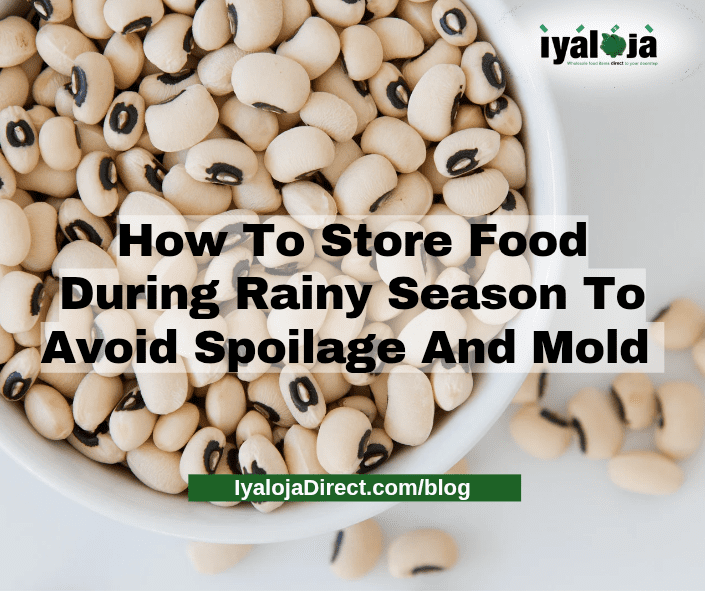
Have you ever opened a bag of beans and perceived that strange smell? Or reached for pepper and found it molding? The reason is because during the rainy season, everywhere is wet, and the air is damp. If you’re not careful, your foodstuff can spoil quickly.
But guess what? You can actually store your food and keep it fresh during the rainy season. Let’s find out why food spoils easily in the rainy season.
Why Food Spoils Faster In Rainy Season
The main culprit? Moisture.
The rainy season comes with humid air and less sunlight. Your kitchen becomes warm and damp, perfect conditions for mold, rot, and weevils to grow. And when electricity is unstable, fridges and freezers can’t help much. The question then is, what is the best way to store food? Let’s explore.
Tips To Store Your Food Properly
To store your food and avoid spoilage due to the raining season, these tips could be helpful
1. Use Airtight Containers Or Buckets
Transfer your garri, beans, rice, and crayfish into dry, airtight plastic containers or covered buckets. Don’t leave them in the original market bag. Moisture can enter it and spoil everything.
Before storing, leave the food open under the fan for a few hours to remove trapped moisture.
2. Don’t Keep Food Directly On The Floor
Never keep bags of food directly on the floor, especially tiles or concrete. The cold, wet floor adds hidden moisture. Instead, place bags on a wooden plank, shelf, or crate to allow circulation of air under them.
3. Dry Foods Under The Sun.
Whenever the sun shows face, take advantage of it. Spread pepper, crayfish, ogbono, egusi, or even dry fish under the sun to keep them fresh. 30 minutes of sunlight can reduce hidden dampness.
4. Use Nylon Or Ziploc Bags For Smaller Items
Stocking up on seasoning, spices, or dry pepper? Store them in double-layered nylon or Ziploc bags to keep them safe from moisture and insects.
5. Avoid Storing In Dark, Damp Corners
The back of the cabinet or a corner of the kitchen might seem like a good idea, but if it’s cold and dark, mold can form. Choose well-ventilated areas, even if it’s just top of your fridge or a shelf near a window.
6. Don’t Buy Wet Produce In Large Quantity
During the rainy season, tomatoes, onions, potatoes, and vegetables may already be moist from rain. If you must buy, either use them quickly, or blend and preserve in airtight containers.
7. Add Dry Items Like Salt To Absorb Moisture
For dry foods like beans or garri, you can drop a small sachet of salt or dry paper towel to absorb moisture.
The rainy season doesn’t have to spoil your food, or your budget. With the right storage tricks, you can keep your food dry, safe, and fresh till you’re ready to use it.
Tired Of Losing Money To Spoiled Food?
Subscribe to our blog and follow us on our page IyalojaDirect_ng for more helpful tips.